


Overtone Strategies
Brand Strategy
Brand Design
Web Design
Overview
A gym owner and elite athletic coach needed to enter the corporate wellness market but his brand, messaging, and digital presence spoke to athletes, not HR directors. We developed the brand strategy, visual identity, and website that repositioned his expertise for a completely new audience without losing the credibility that differentiated him in the first place.
Twenty-Five Years of Credibility, and No Way to Introduce It
Mara Hazzard-Wallingford spent a career inside nonprofit leadership: operations, marketing, project management, and most recently Chief Growth Officer at a nonprofit software company. Rochester's nonprofit sector already knew her work. What it didn't know was that she was now for hire, or what for.
She named the problem herself: "I have been doing B2B sales and marketing for 12 years, but it is so much harder to sell and market myself."
That's the position most people are in on day one of consulting. The expertise is real and the demand is real, but nothing in between is built. Her offers existed loosely in her head. Her audience, nonprofit executives carrying more than they can hold, had no way to find her, and no short sentence to pass along when someone asked who could help.
For a solo consultant, the brand isn't a marketing layer sitting on top of the business. It is the business, in every place she shows up before she gets to speak.
Naming the Work Before Designing It
We started with strategy, not design. Over a two-day sprint we defined the mission and vision and mapped the audience she was best positioned to serve.
The positioning came out of that: not another consultant chasing quick wins, but someone who genuinely centers client needs. Where specialists bring one discipline, Mara brings strategy, technology, facilitation, and execution together. That resolved into a value proposition plain enough to say out loud and repeat: help overwhelmed changemakers find clarity and purpose.
Then we made the offers real. Two of them, each mapped onto a scenario a nonprofit executive would recognize as their own situation — fractional senior leadership for organizations that need experience without a full-time hire, and facilitation for the conversations a leadership team keeps postponing.
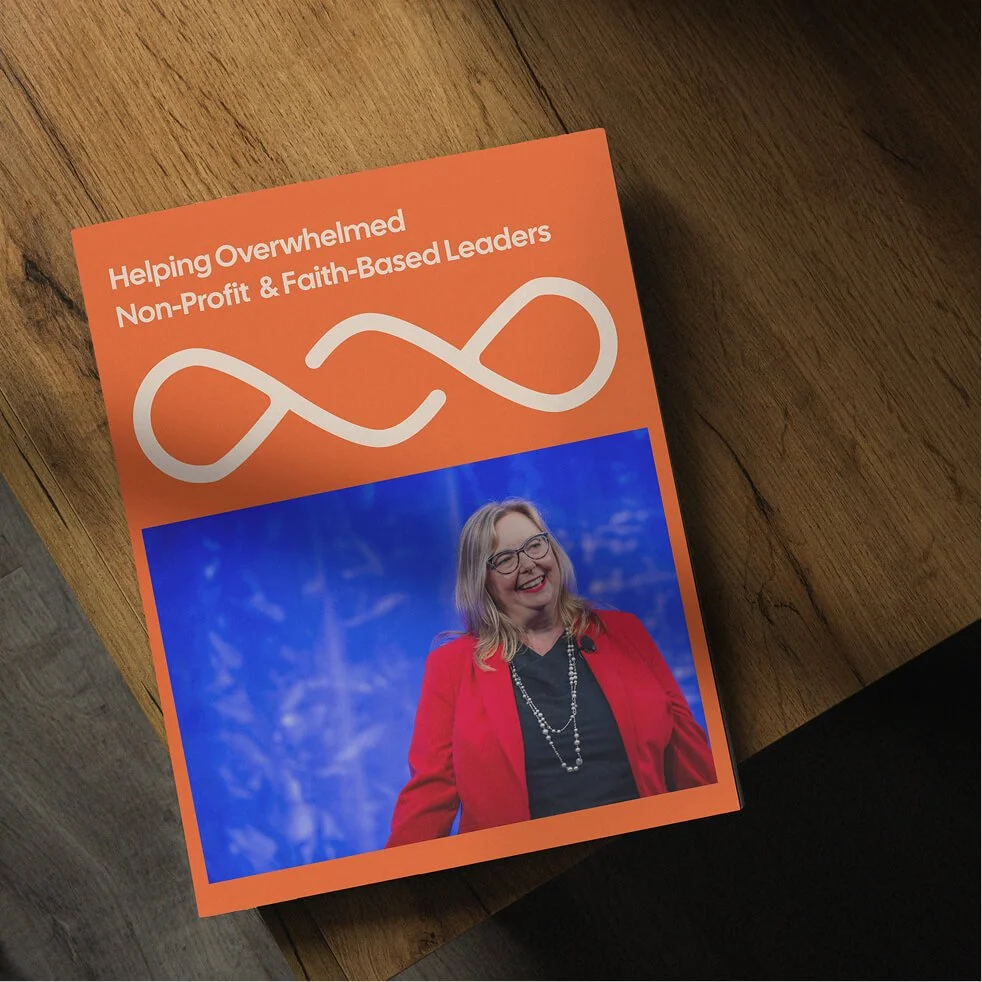
The sprint output: positioning, audience, offers, and a 3/6/9-month roadmap with 90-day actions and the measures of whether they worked.
-
A Brand Built for the Places She Actually Shows Up
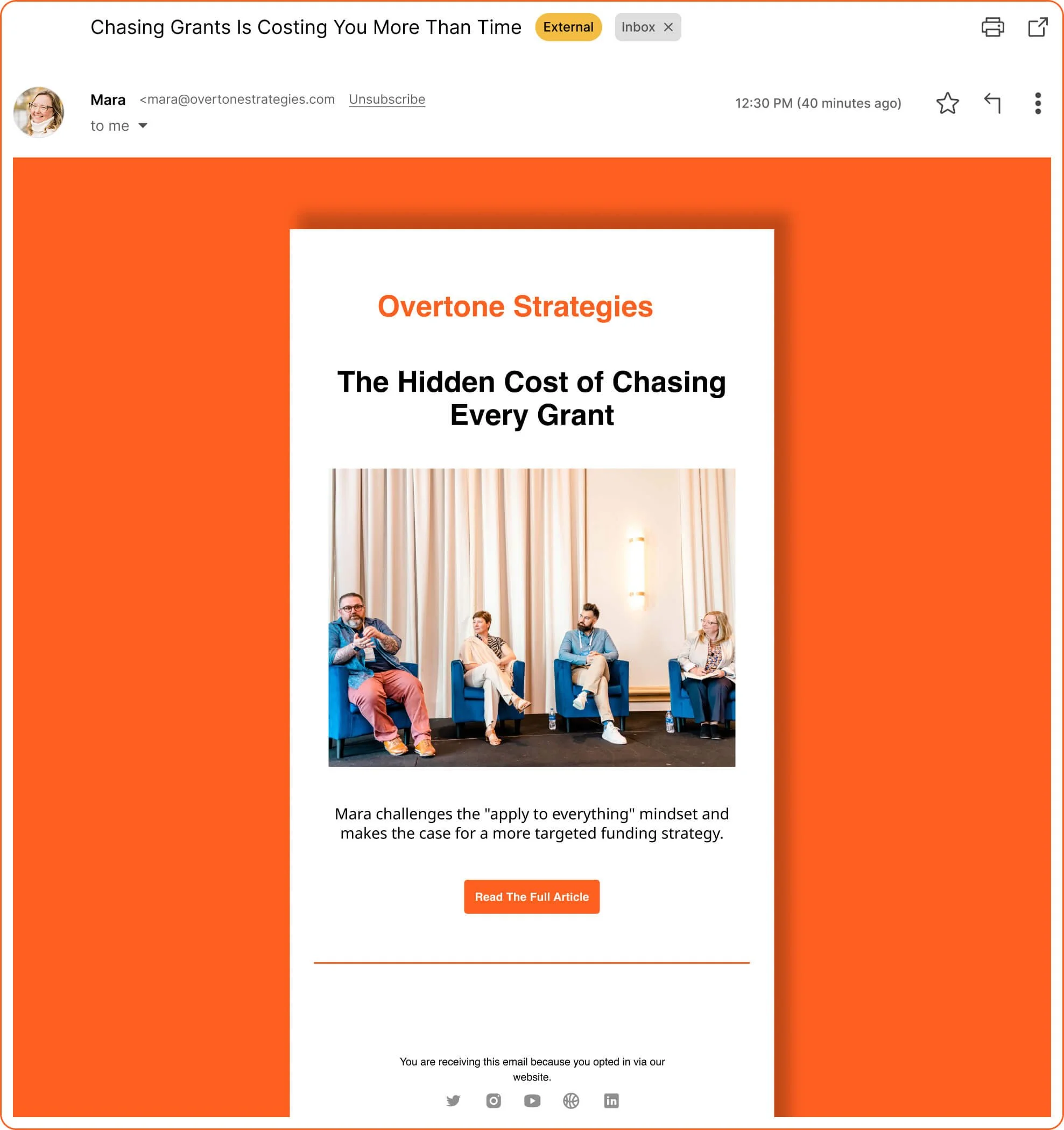
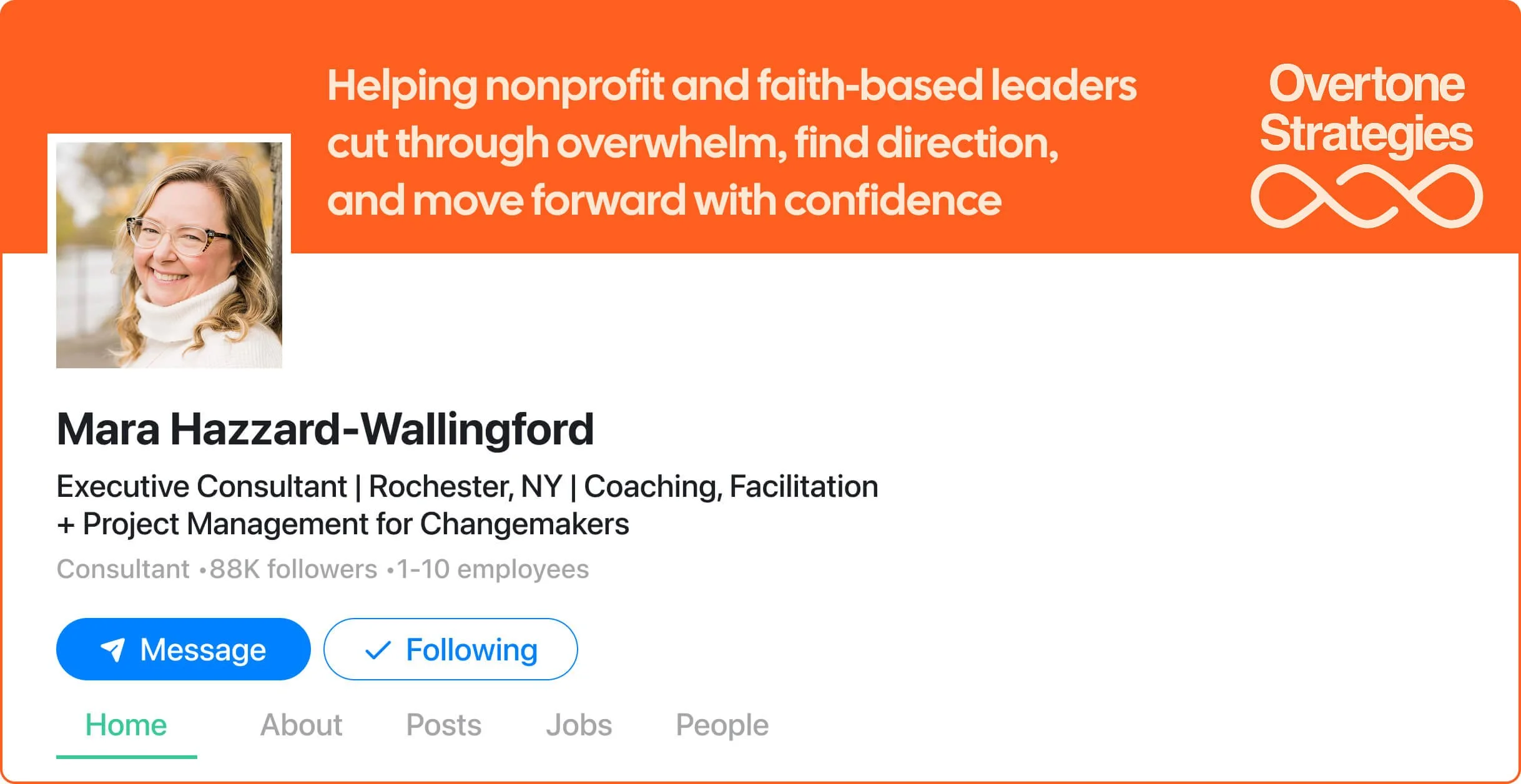
Overtone doesn't have a storefront or a sales team. It has an email signature, a LinkedIn headline, a card handed over at the end of a conversation, and a newsletter that arrives in an inbox already full of them. Every one of those is a first impression, and every one of them had to say the same thing.
So the identity was designed for small surfaces first: legible at the size of a favicon, composed enough to sit beside a nonprofit's own brand without competing with it, warm enough to belong to a person rather than a firm.
One Page Now, a Structure for What's Next
Mara was launching, which meant the budget was real and the timeline was short. Rather than build a site sized for a business that didn't exist yet, we built one page that did the whole job: who she is, who she's for, what she offers, and how to start a conversation.
Alongside it we handed over a sitemap for the site she'd grow into: every future page defined by its audience, its message, its key sections, and its call to action. She owns the platform outright, and she can build the next page herself when the business asks for it, without guessing at what it should say.
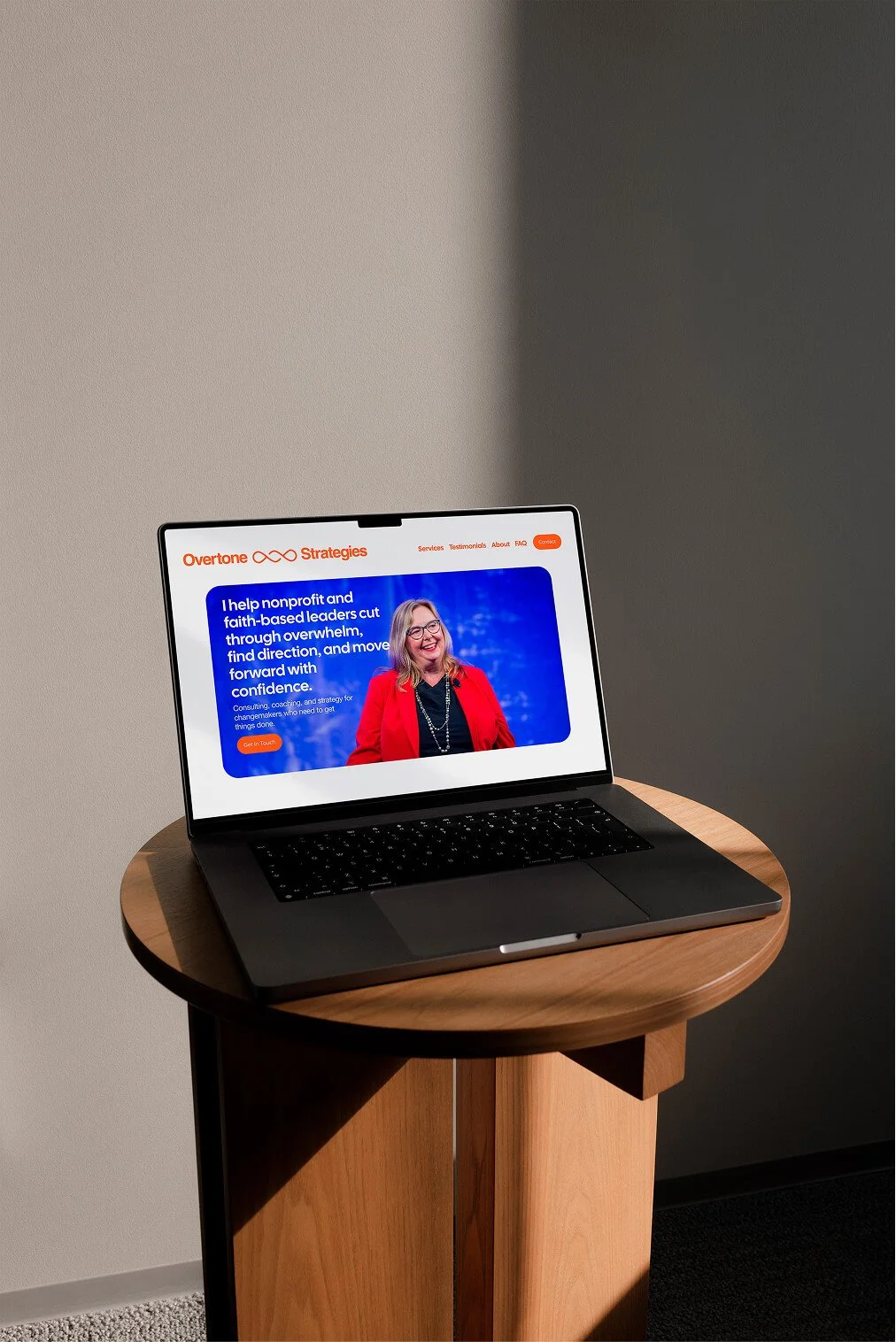
Before this engagement, Mara had 25 years of judgment and no way to sell it. Now she has language she can use in a room, a brand that arrives before she does, and a website that does the explaining so the first conversation can start further along.
Her services are defined clearly enough to be recognized and clearly enough to be referred, which is how this work compounds.